
Roof Rejuvenation vs. Roof Replacement: Is It Worth It?
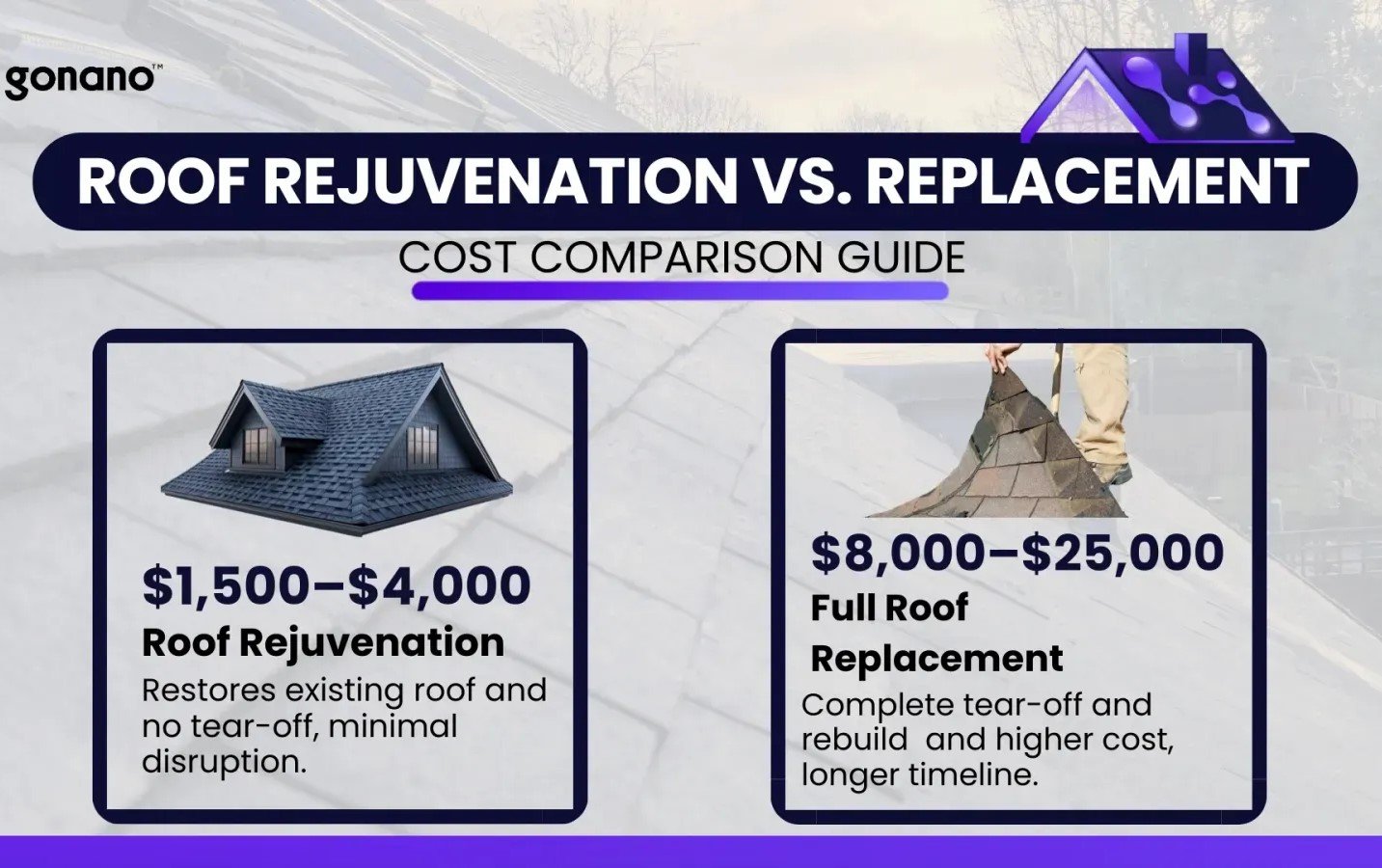
Roof rejuvenation costs a small fraction of a full replacement and extends a sound asphalt roof's usable life for years. Proven to be stronger against hail, more flexible to resist tears and fire resistant.
Rejuvenation restores the shingles you already have instead of tearing them off. For a roof that's aging but structurally sound, it's usually the far better financial decision, and this guide shows the math, including the cost-per-year question skeptics rightly ask.
How Much Does a Full Roof Replacement Cost?
A full asphalt-shingle replacement commonly costs $8,000 to $25,000 or more, and large, steep, or complex roofs run higher. That number is only part of the picture. Replacement also means a multi-day project, tear-off noise and debris, potential surprise costs if the deck underneath needs repair, and tons of old shingles headed to the landfill. It's the right call for a roof that has actually failed, but it's an expensive default for a roof that's simply aging.
How Much Does Roof Rejuvenation Cost?
Rejuvenation is a fraction of replacement cost, typically a small share of what a tear-off would run, because it restores your existing shingles rather than replacing them. For the fundamentals, see what Structural Roof Rejuvenation is. The exact price depends on your roof's size, condition, and the system your contractor installs, so a Certified GoNano Contractor gives you an exact quote after assessing the roof. Most roofs are treated in a day. Always a fraction of a new roof - 15 to 25%.
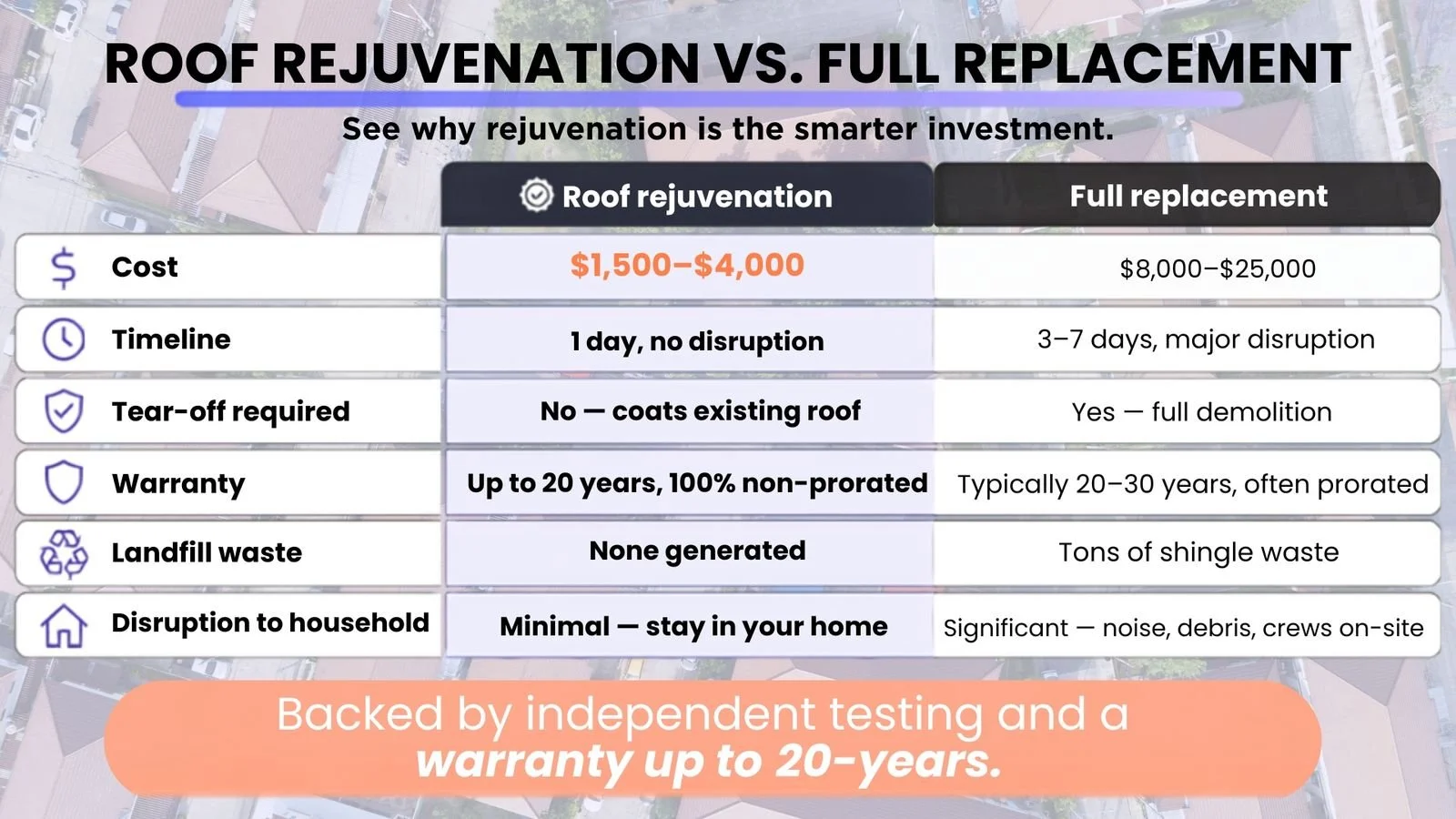
Our Warranty: up to 20 years, 100% non-prorated on the full treatment, transferable to next owner.
Is Roof Rejuvenation Worth It? The Cost-Per-Year Math
The sharpest objection to any roof treatment is a cost-per-year one: "If I pay for rejuvenation and still replace eventually, did I really save?" It's a fair question, and the honest answer comes down to three things: how long the treatment is warrantied, whether that protection holds its value, and how many times you have to pay for it.
1. A single GoNano application, the full Fortify treatment, done in one visit, is warrantied up to 20 years and stays 100% non-prorated, so the coverage doesn't shrink year over year.
2. Shorter-term treatments that need reapplication every few years stack up repeat costs to reach a comparable span, so their "low" price is really a recurring one.
3. Every year you extend a sound roof is a year you don't spend $8,000 to $25,000 on replacement, money that stays invested in your home and your pocket.
Measured per protected year, a long, non-prorated, single-application warranty is the point where rejuvenation stops being merely "cheaper up front" and becomes the better financial decision, provided your roof is a genuine candidate.
When Replacement Is the Better Choice
Rejuvenation isn't magic, and honesty is part of the value. If your roof is actively leaking, has widespread missing or broken shingles, or has reached the true end of its structural life, replacement is the right call, and a good contractor will tell you so. Rejuvenation is for roofs that are aging but still structurally sound: losing granules, fading, or stiffening, but not failed. The best way to know which camp your roof is in is a professional assessment, which starts with knowing the right questions to ask a roofing contractor.
The Truth About Shingle Manufacturer Warranties
Part of what makes a new roof feel "safe" is the warranty on the shingles. Read the fine print before you count on it, because manufacturer asphalt-shingle warranties are written to protect the manufacturer, not you. Most are heavily prorated. You typically get full, labor-inclusive coverage only for a short initial window, often just the first few years. After that, the payout drops to a prorated fraction of the material cost based on the roof's age, and labor, tear-off, disposal, flashing, and related costs are usually excluded outright. In practice, a defect a few years into a "30-year" roof can net you a few hundred dollars against a repair that runs into the thousands.
The long numbers on the label rarely match what happens on the roof. In Roofing Ripoff: Why Your Asphalt Shingles Are Falling Apart, veteran builder and nationally syndicated "Ask the Builder" columnist Tim Carter documents how modern asphalt shingles routinely fail long before their warranty term (his own 30-year shingles started failing in about a decade) and how those warranties are structured to leave homeowners holding the bill anyway. It's worth reading before you assume a new roof's paperwork has you covered.
The lesson: a warranty's structure matters far more than its headline number.
Does It Actually Work, and Hold Up?
Cost only matters if the treatment performs. If you still wonder whether roof rejuvenation actually works, GoNano's Structural Roof Rejuvenation system is backed by more than $1 million in independent testing. In one striking result, testing at Green Center (now Impact Chemistry) found that a 15-year-old roof treated with NuRoof Revive outperformed a roof with brand-new shingles. Treated shingles have also earned UL 2218 Class 4 (impact, relevant to hail damage and your roof), ASTM D3161 Class F (wind, rated to 110 mph), and UL 790 Class A (fire). GoNano also appeared on Canada's Dragon's Den (Canada's equivalent of Shark Tank).
Here's a cost most people forget to factor in: insurance. GoNano's is also tested by IBHS, the Insurance Institute for Business and Home Safety, the same group insurers actually look at when deciding what a roof is worth covering. So a treated roof doesn't just hold up better in a storm. It could mean a lower premium every year too, on top of everything else you're already saving.
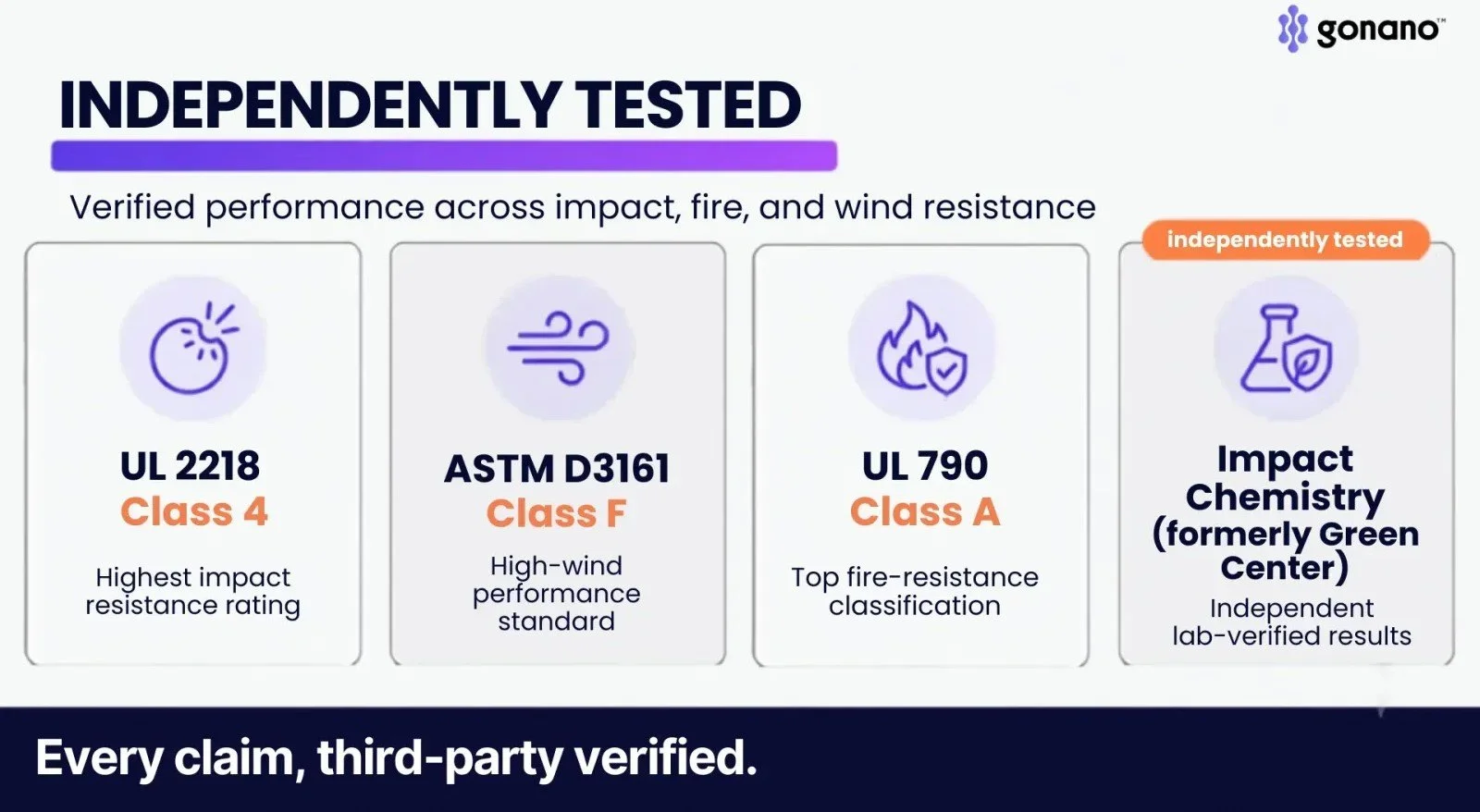
Independently Tested with every claim Third-Party verified.
The Warranty Is Part of the Value
By contrast, GoNano's full treatment is 100% non-prorated. The protection you pay for doesn't shrink with age, and there's no proration schedule quietly working against you. And because the warranty is transferable, it becomes a selling feature if you list your home, so your roof reads as an asset to the next buyer rather than a looming expense. That's real financial value on top of the up-front savings.
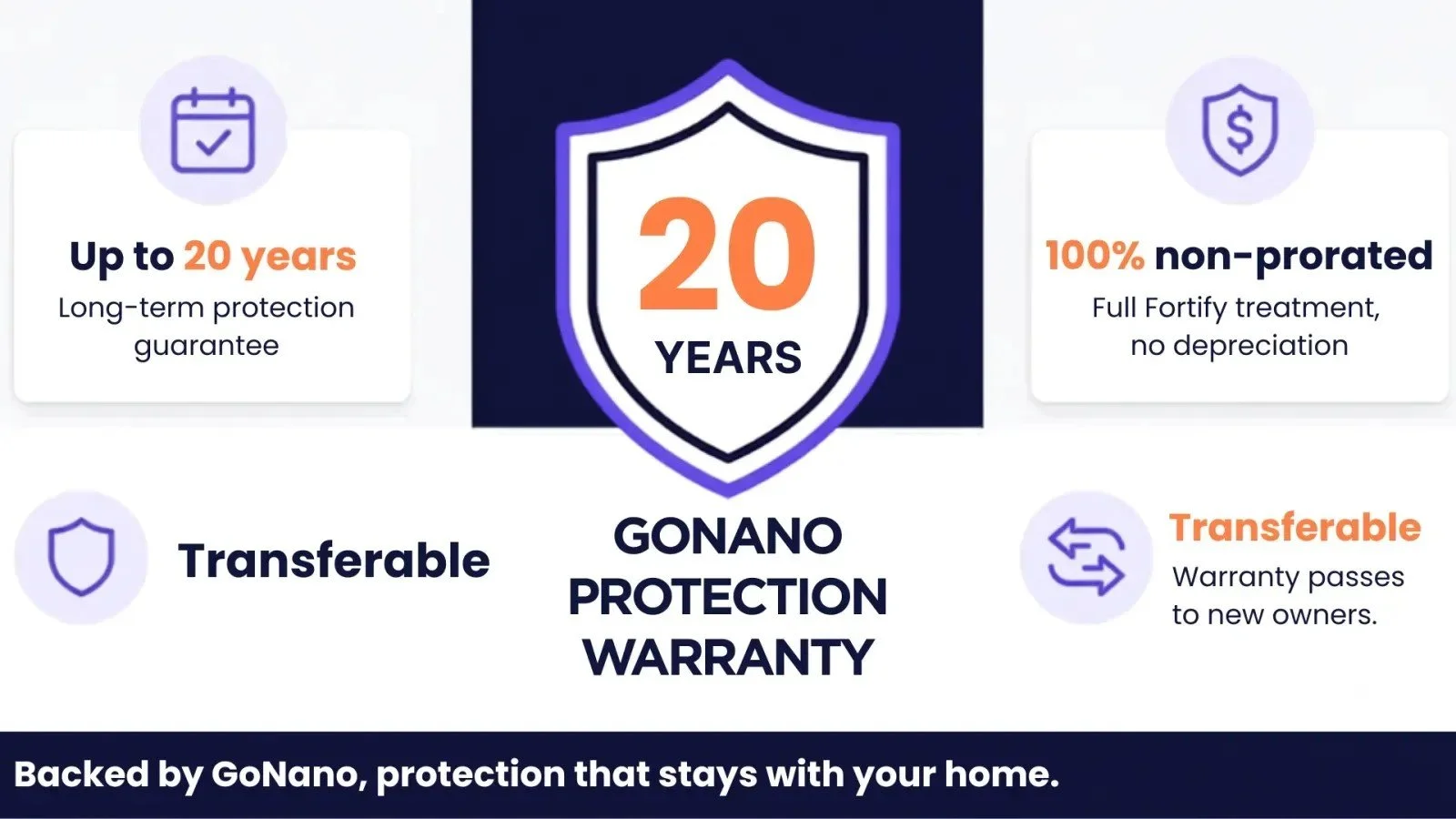
Warranty up to 20 years, 100% non-prorated on the full treatment, transferable to the next owner.
The Bottom Line
For an aging but sound asphalt roof, rejuvenation is a fraction of replacement cost, extends usable life for years, and, measured per protected year against both replacement and short-term reapplication products, is usually the smarter money. The one thing that decides it is your roof's actual condition.