
Why Asphalt Shingle Roofs Fail Early
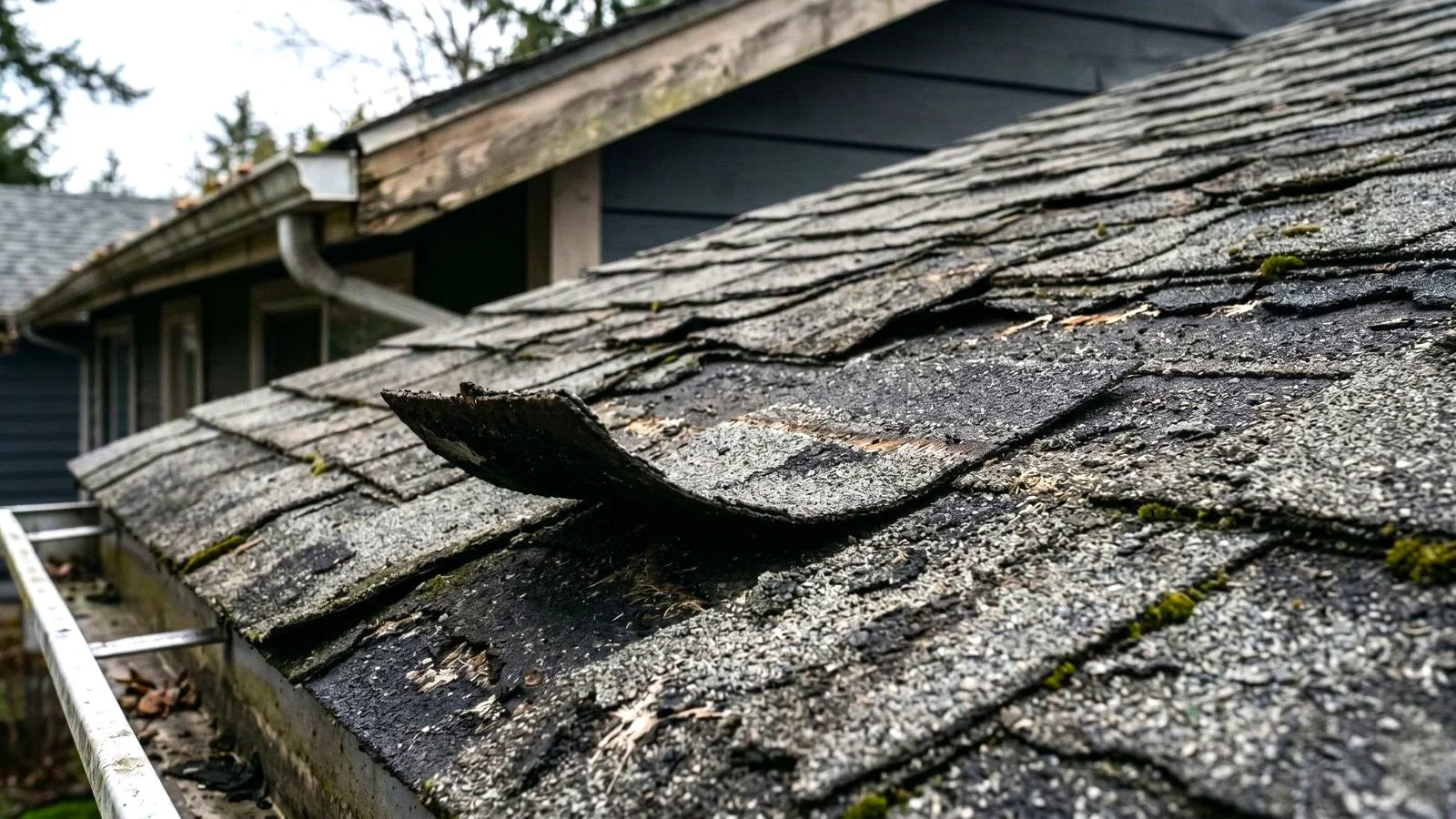
"Visible granule loss and tab curling are the earliest signs of premature shingle failure."
Asphalt shingle roofs fail early when granule loss, weather impact, poor ventilation, and installation defects shorten the roof's structural life faster than its warranty predicts. Most asphalt roofs are warrantied for 25–30 years but begin failing within 15–20 years and in high-impact weather regions, even sooner.
Below are the ten most common causes of premature asphalt shingle failure, in the order they typically appear.
Granule loss
The mineral granules on shingles are the roof's UV protection layer. When they wash off into gutters, the asphalt underneath is exposed to direct sun and begins to degrade rapidly. Granule loss accelerates with hail, foot traffic, and aging and once it starts, the rest of the failure cascade follows quickly.
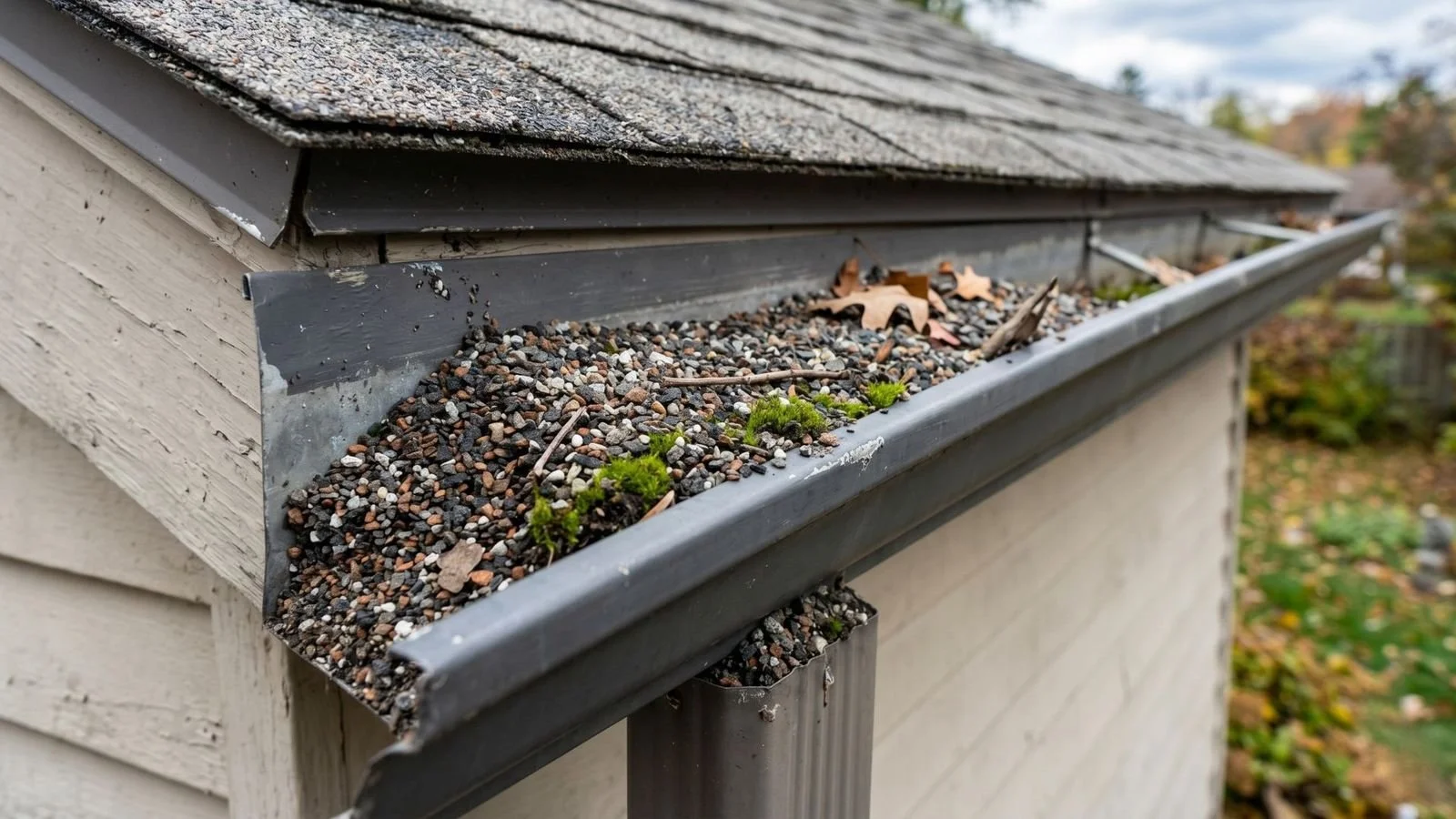
"Visible granule loss and tab curling are the earliest signs of premature shingle failure."
Hail damage
Hail bruises shingles even when no visible crack appears. Bruised shingles lose their granule layer faster, crack at the bruise point during freeze-thaw cycles, and become entry points for water. A single hailstorm can cut a roof's remaining life in half.
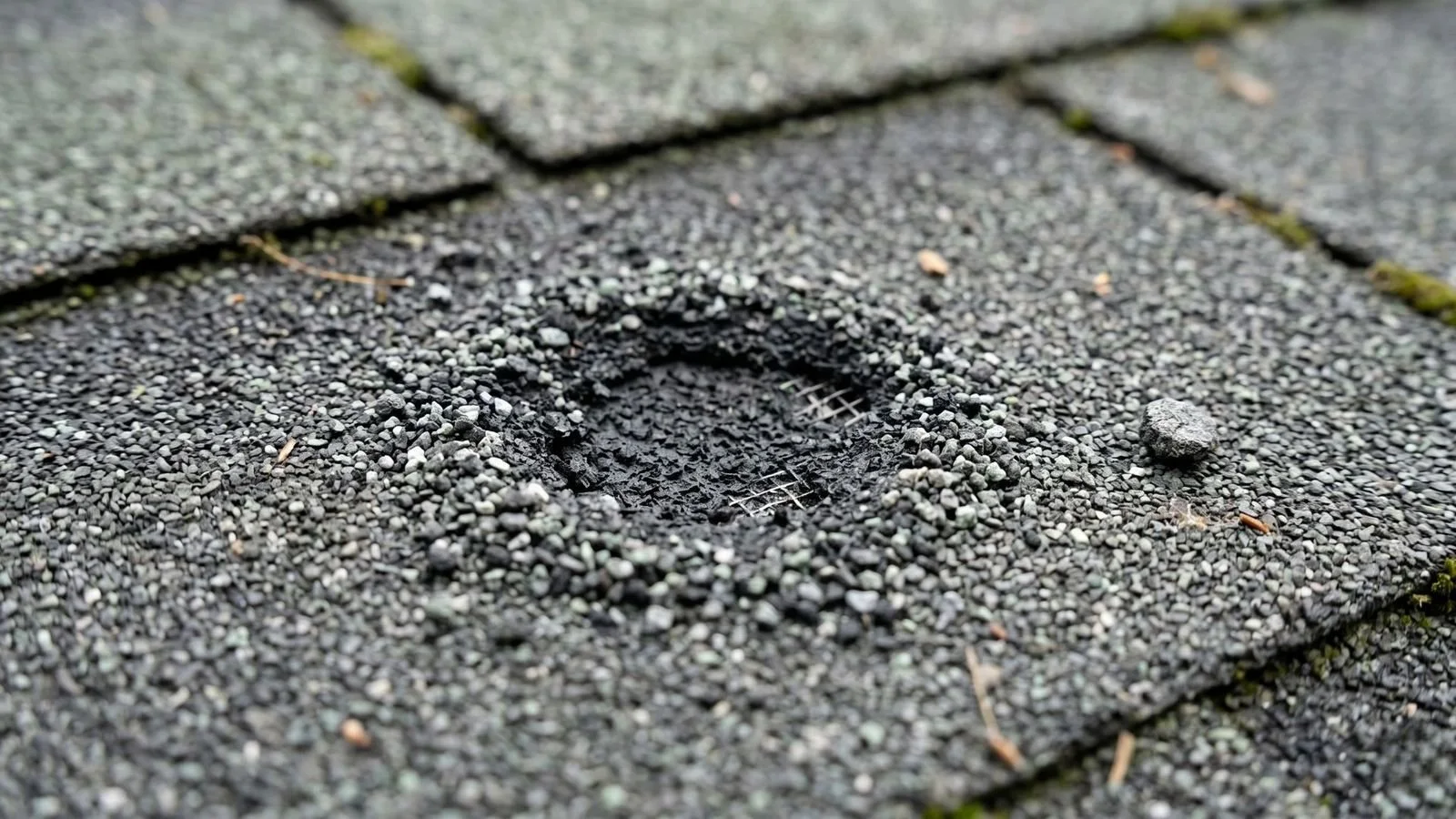
Hail damage example
Wind uplift and tab failure
High winds lift shingle tabs, breaking the sealant strip that holds them flat. Once the seal is broken, every subsequent wind event lifts the tab further until it tears off entirely or admits water underneath.
Poor attic ventilation
An under-ventilated attic traps heat in summer and moisture in winter. Trapped heat bakes the shingles from below, accelerating asphalt oxidation. Trapped moisture rots the deck and creates the conditions for ice dam formation in cold climates.
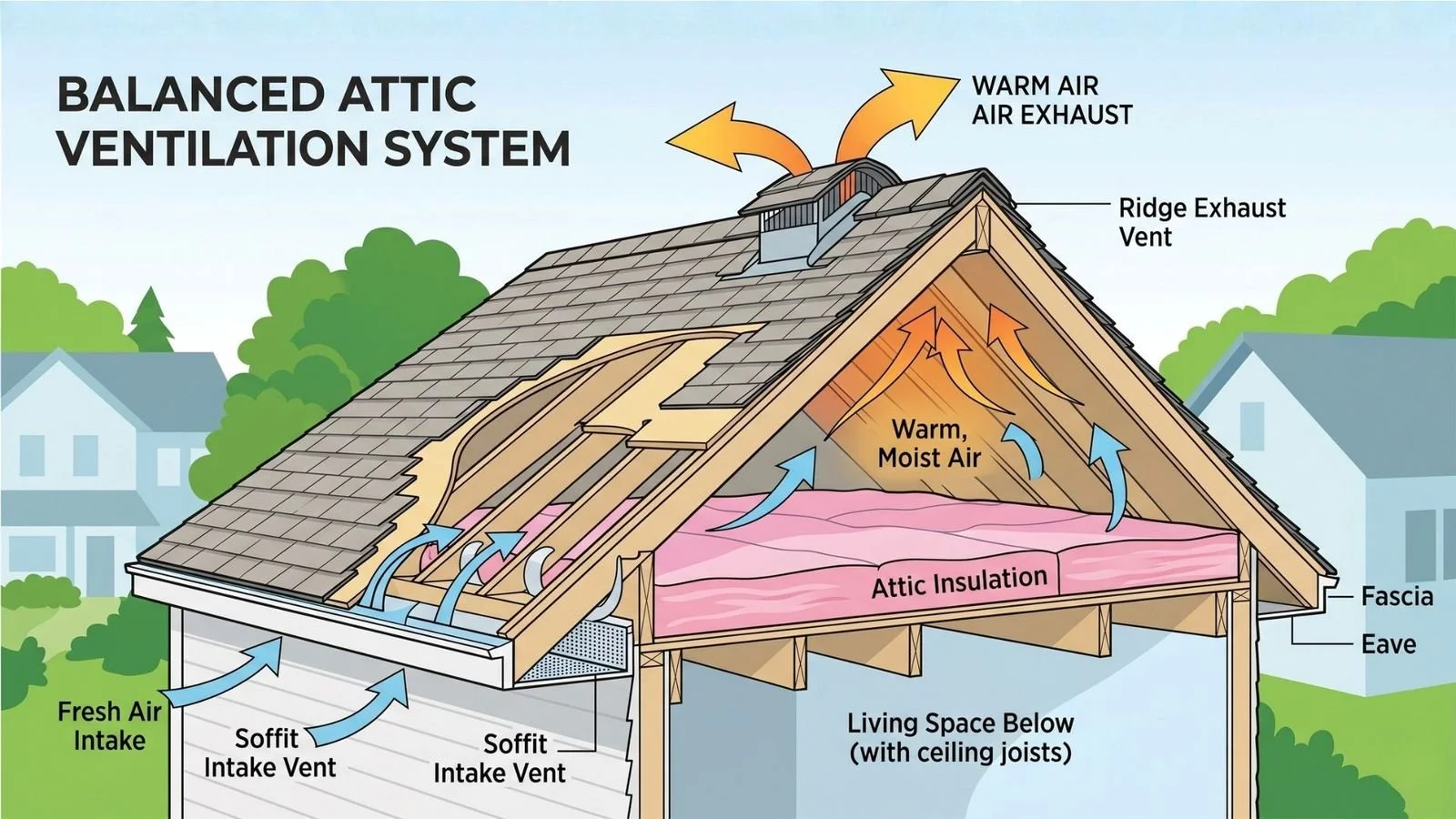
Balanced soffit-to-ridge ventilation keeps the attic temperature within ~10°F of outside air.
Inadequate insulation
Insulation gaps cause uneven roof deck temperatures. In winter, snow melts unevenly and refreezes at the eaves, creating ice dams that force water back under the shingles. In summer, hot spots accelerate localized aging.
Improper installation
Misaligned nails, missing starter strips, incorrect overlap, and skipped underlayment all reduce a roof's resistance to wind and water. Installation defects often don't appear as failures for several years by which point the warranty conversation has shifted.
UV degradation
Asphalt is a petroleum product. Constant UV exposure breaks the molecular bonds in the asphalt matrix, causing brittleness, color fade, and surface cracking. UV damage compounds every other failure mode on this list.
Freeze-thaw cycles
Water that gets into a hairline crack, freezes, and expands will widen that crack every cycle. In climates that swing through the freezing point dozens of times each winter, this is one of the most aggressive aging mechanisms a roof faces.
Tree contact and debris
Branches scrape granules off, trapped leaves hold moisture against the shingle surface, and falling limbs cause direct impact damage. Roofs under heavy tree cover age noticeably faster than roofs in open exposure.
Aging asphalt
Asphalt loses its plasticizing oils over time. Older shingles become brittle, lose their flexibility, and crack along the keyways. Even a perfectly maintained roof eventually reaches the end of its asphalt's useful life unless the asphalt is restored.